


Classrooms these days are never more multicultural than they are today. Teachers and students bring with them different cultural experiences, languages, and learning styles. Diversity is a favor—it adds new ideas and perceptions to the learning space. It’s also a challenge for teachers: never a one-size-fits-all policy applies. What is required is flexible instruction that is all-encompassing and culture-sensitive to make all feel represented.
Education in diverse settings requires knowledge that students do not all learn in the same ways. Some would respond positively to working together, brainstorming with other students, but other students would respond better to charted, individual work. Keeping these differences in mind and infusing them into the curriculum creates a space in which all students can identify with the process of learning.
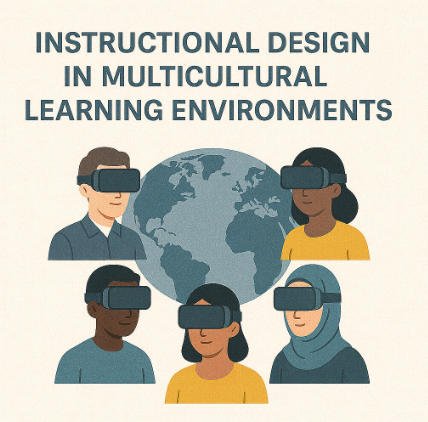
Here, technology plays a transformative role. Learning technologies such as laboratories that can be experienced with a VR format and interactive platforms allow one to craft flexible, interactive experiences that can be customized for different learners. A laboratory that can be experienced with a VR format, for example, can simulate real-life experiments and bring students from different cultural and education traditions together to cooperate from a common digital space. It not only removes geographical and distance gaps but also makes education more personal and inclusive.
By combining innovative technology with responsive culture, teachers can breathe life into a fully inclusive classroom culture. Students feel respected, supported, and empowered to thrive no matter their culture. In the long run, that combination does more than increase achievement outcomes; it provides students with skills that they can take with them to their globally interconnected lives, in which working across cultures is routine practice.
Author
Mehmet KARA
Early Stage Researcher in VILLAGE Project
Ph.D. Candidate, Ege University


No responses yet