
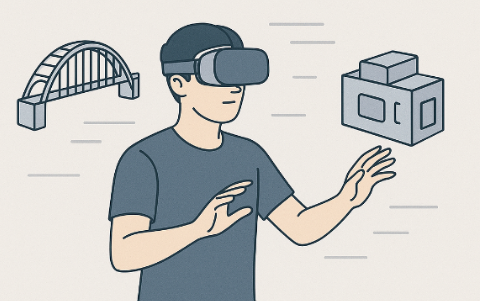

Learning by doing is certainly the most effective way to achieve knowledge and skills, and this approach is all the more relevant to technical disciplines such as engineering. Applications in Virtual Reality (VR) are modifying this approach by offering virtual worlds in which students can perform practice, investigate advanced systems, and practice realistic situations.
It is unlike traditional learning because VR permits a safer and financially stable trial-and-error site. It permits students to err, repeat processes, and practice understanding without material limitation or danger inherent in traditional labs. It then builds an interactive learning environment that encourages problem-solving and critical thought.
Further innovation in VR technology will allow application in experiential learning to further become widespread. Future classrooms will be able to integrate VR and practice in a manner that will allow for interactive and transformative learning experiences.
Author
Gökhan GÜRBÜZ
Early Stage Researcher in VILLAGE Project
Ph.D. Candidate, Ege University


No responses yet