
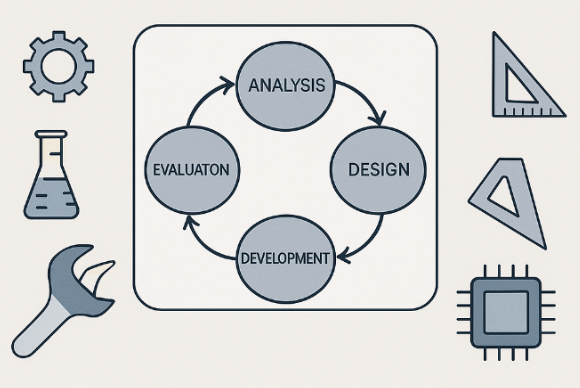

Instructional Design Models (IDMs) or systematic designs bring order and coherence to learning and instruction. They are typical in general education but seldom seen in bold relief within engineering education. Engineering programs tend to be related to highly abstract concepts, highly developed systems, and highly application-oriented. Left without a careful plan of instruction, students can barely bring engineering problems that they find in practice and theoretical foundations together.
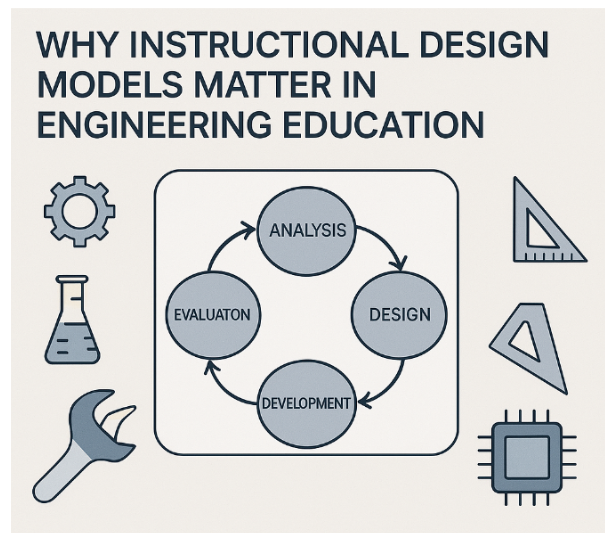
Such models as ADDIE, ASSURE, and Problem-Based Learning (PBL) provide teachers with systematic means to connect learning objectives, instructionally relevant activity, and assessment tools. To cite but a few examples, the cyclical nature of ADDIE’s analysis, design, development, implementation, and evaluation ensures that courses remain subject to continued improvement and refinement in response to learners’ needs. Just as ASSURE places a conscious emphasis upon combining technology and media within the learning environment.
The imperative in modern engineering studies that makes such intense use of computer-based labs and simulation software the PBL approach emulates the nature of engineering practice by involving students cooperatively in solving actual problems.
IDMs’ adoption can be instrumental in facilitating active and inclusive learning spaces. Such practice sharpens desirable competencies such as critical thinking, problem solving, collaboration, and flexibility, the very competencies that engineering recruiters always expect engineering graduates to have. IDMs further enable incorporation of innovative new pedagogic technologies such as Virtual Reality (VR), Augmented Reality (AR), or Artificial Intelligence (AI) into curriculum in a systematized and pedagogically informed manner. Ultimately, quality instruction design does more than boost in-classroom interaction—it equips future engineers with skills that enable them to thrive in research and practice.
Author
Gökhan GÜRBÜZ
Early Stage Researcher in VILLAGE Project
Ph.D. Candidate, Ege University


No responses yet