
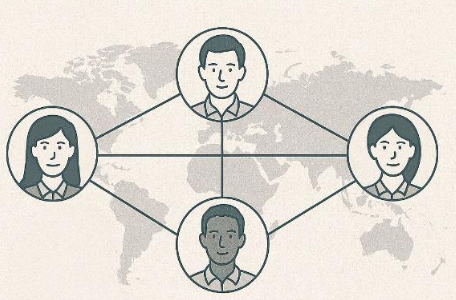

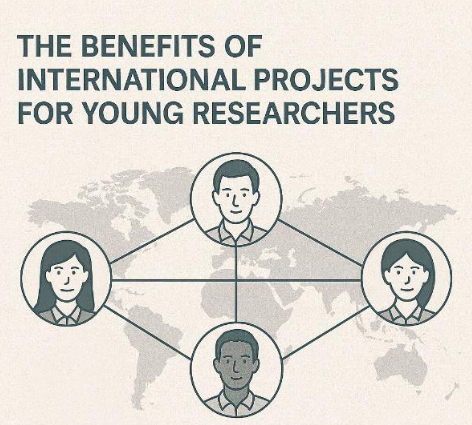
A world work environment is a new and often once-in-a-life-time opportunity for early researchers to broaden their professional and personal horizons. Beyond acquiring technical competency, such experiences expose researchers to other cultures, working methods, and academic and industrial practices of doing research. These experiences foster adaptability, creativity, and strength capabilities that increasingly become necessary for being different from the crowd of researchers in a competitive world of research.
Participation in interdisciplinary projects further supports these benefits by providing early career researchers. The achievement of substantial contacts with peers, supervisors, and from industry such as in the German case-opens access to platforms for collaborative outputs, funding for collaborative studies, and large-scale collaborative startups over the course of their careers. More essentially, these contacts often present access to future employment in academia, such as for doctorates and postdoctoral fellowships, and career opportunities in industry, throughout Europe and globally. In these regards, participation in international projects functions to initiate professional advancement and career portability.
No less than that is the value such experiences hold for developing self-confidence and autonomy. Skills of such a sort of project management and intercultural communications to problem-solving with uncertainty being valued in today’s job market are greatly valued by employers. For early career researchers, having the ability to demonstrate not only intellectual prowess but their capacity to hold their own in different and tough environments provides them with a significant advantage in shaping a sustainable and impactful career trajectory.
Author
Gökhan GÜRBÜZ
Early Stage Researcher in VILLAGE Project
Ph.D. Candidate, Ege University


No responses yet